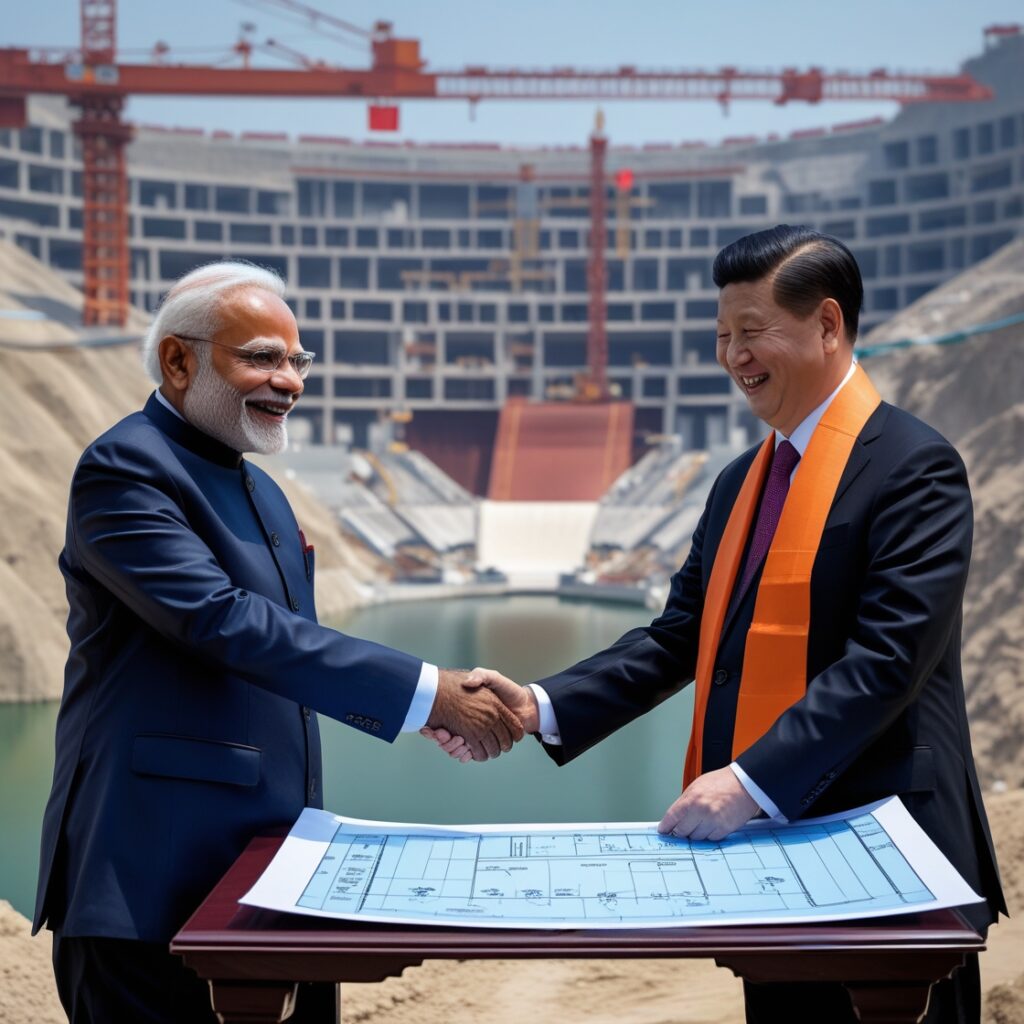
“Water is Life”; is one of the basic elements on Mother Earth. Nature has allotted it to living things on earth as a gift. China has decided to utilize this gift to produce approximately 300 billion kilowatt-hours of electricity annually by building a mega hydropower dam on the Yarlung Zangbo River. A part of this river falls 6561 feet within 50 km offering tremendous hydropower potential. According to Xinhua news agency, this project will play a major role in meeting China’s carbon peaking and carbon neutrality goals, stimulating related industries such as engineering, and creating jobs in Tibet.
Chinese officials say, the mega-dam project would not have a major impact on the environment and downstream water supplies as it has been commenced on the upper reaches of the Yarlung Zangbo, which flows from the west to the east of Tibet.
But this gift can be a “Water Bomb” for millions downstream in India and Bangladesh. The Yarlung Zangbo River flows into India and Bangladesh as the Brahmaputra River, serving as a crucial water source for millions. There are fears that the dam could alter water flow, affecting agriculture, ecosystems, and livelihoods downstream. Neighboring countries and environmentalists have raised concerns. The geopolitical tensions arise because of the dam’s construction. Moreover, this project will displace millions of people in Tibet and will severely affect the most diverse and rich local ecosystem of the region.
India is advancing its hydropower projects in the northeastern state of Arunachal Pradesh, a region also claimed by China. The Indian government plans to invest in developing 12 hydropower stations to enhance its strategic and water security in the area. India should double its efforts to manage the Brahmaputra River water.
Developing such large-scale infrastructure projects on transboundary rivers underscores the need for collaborative water management and open communication among the countries involved to address shared environmental and security concerns.
Should India believe China, that the dam on the Brahmaputra River will not negatively affect the downstream areas? Let’s see the
Reasons to be skeptical

Past Experiences
China has previously built dams on transboundary rivers like the Mekong, leading to reports of reduced water flow and downstream impacts in countries like Laos, Thailand, and Cambodia. This experience raises concerns about issues similar to those of the Brahmaputra.
Lack of Transparency
China is not a signatory to international agreements like the UN Watercourses Convention, which promotes equitable and sustainable use of transboundary rivers.
Limited sharing of data about river projects.
Potential for altered flows
While China claims the dam will primarily generate hydropower, dams inherently impact water flow patterns, sediment transport, and ecosystems. Downstream agriculture and livelihoods in India and Bangladesh could still be affected.
Geopolitical context
The region’s strategic sensitivity – combined with unresolved border disputes between India and China – raises concerns about water being used as a potential political tool.
Reasons to Consider Their Claim
Focus on hydropower
If the dam is designed exclusively for hydropower without significant water diversion, it may not drastically alter downstream water availability. Hydropower dams often allow water to flow through turbines and back into the river.
Global Climate Commitments:
China’s goal of achieving carbon neutrality by 2060 includes significant investments in renewable energy, including hydropower. The dam could align with this broader agenda.
No Large Diversion Announced
China’s plans do not explicitly involve diverting the Brahmaputra’s flow to other regions, which could mitigate downstream impacts.
While China’s claims might have merit, history and the lack of independent verification warrant a cautious approach.
What should be done?
Independent Studies:
Third-party environmental impact assessments and ongoing monitoring are critical to understanding the dam’s effects. Without unbiased, science-based insights from independent studies, the long-term consequences of the Brahmaputra mega-dam could remain misunderstood, leading to irreversible environmental damage and heightened geopolitical tensions. Third-party e.g. International Rivers (NGO), World Resources Institute (WRI) and UNESCO assessments provide the foundation for:
- Responsible decision-making.
- Informed policy creation.
- International collaboration.
- Impact of large dams.
- Sustainable resource management and assistance in water resource management studies and conflict resolution.
Bilateral/Multilateral Agreements
- India, Bangladesh, and China could benefit from:
- cooperative water-sharing agreements to ensure transparency and trust through data exchange and equitable usage. Establish a system for sharing real-time hydrological and meteorological data between China, India, and Bangladesh.
- A cooperative approach to managing the Brahmaputra River can transform potential conflict into sustainable development opportunities.
- Agreements foster not just water security but also regional peace, economic collaboration, and environmental preservation. By prioritizing dialogue, shared goals, and shared resources, India, Bangladesh, and China can address challenges proactively, ensuring the Brahmaputra remains a lifeline for billions.
Examples of successful water-sharing agreements:
- Indus Water Treaty (India-Pakistan)
- Mekong River Commission (MRC) Comprising countries like Laos, Cambodia, Vietnam, and Thailand, the MRC coordinates the sustainable development of the Mekong River. It’s a good example of multilateral cooperation on a shared river.
- The Ganga water treaty (India – Bangladesh)
Cautious Approach:
As mentioned above, other countries should be very cautious in their approach.
Practical Insights for Brahmaputra River Management
Data Sharing Agreements
- What: Establish a system for sharing real-time hydrological and meteorological data between China, India, and Bangladesh.
- Why: This would help downstream countries predict water availability, plan agricultural activities, and prepare for potential floods or droughts.
- How: Leverage technologies like satellite monitoring and automated gauging stations to collect and share data.
Joint Environmental Impact Assessments
- What: Conduct collaborative studies on the environmental and socioeconomic impact of the dam.
- Why: A common understanding of risks and challenges can prevent disputes and guide policy decisions.
- How: Involve international organizations such as UNESCO or the World Bank to mediate and oversee the process.
Water-Usage Framework:
- What: Negotiate a framework that defines equitable usage, ensuring upstream development doesn’t harm downstream needs.
- Why: This protects the interests of all nations, especially Bangladesh, which is the most vulnerable.
- How: Use precedents like the Indus Waters Treaty to design fair allocation rules.
Flood and Disaster Management Plans:
- What: Create a joint flood management system to tackle risks from dam-induced flooding or glacial lake outburst floods (GLOFs).
- Why: Collaborative preparation can minimize damage to life and property.
- How: Set up early warning systems and joint response protocols.
Involving Regional Organizations:
- What: Facilitate agreements by engaging multilateral bodies like the South Asian Association for Regional Cooperation (SAARC) or the Asian Development Bank (ADB).
- Why: A neutral mediator can help reduce political tensions and ensure compliance.
- How: Fund projects for sustainable river management through international cooperation.
The construction of China’s mega-dam on the Brahmaputra River presents a complex mix of opportunities and challenges for China and downstream nations like India and Bangladesh. While the project aligns with China’s ambitions to meet its renewable energy goals and stimulate regional development, it raises significant concerns about South Asia’s environmental sustainability, water security, and geopolitical stability. The lack of transparency, potential alterations to river flow, and historical precedent of unilateral actions underscore the need for a cautious and collaborative approach.
Independent environmental assessments, data sharing, and bilateral or multilateral agreements are essential to address these concerns. These measures can foster transparency, equitable water usage, and regional cooperation. By prioritizing dialogue, shared resources, and sustainable management, India, Bangladesh, and China can turn this potential flashpoint into an opportunity for collaboration and long-term peace. The Brahmaputra River, a lifeline for millions, must be managed not as a source of conflict but as a shared resource that sustains life, livelihoods, and ecosystems for future generations.






China is not in position to entertain cooperation.