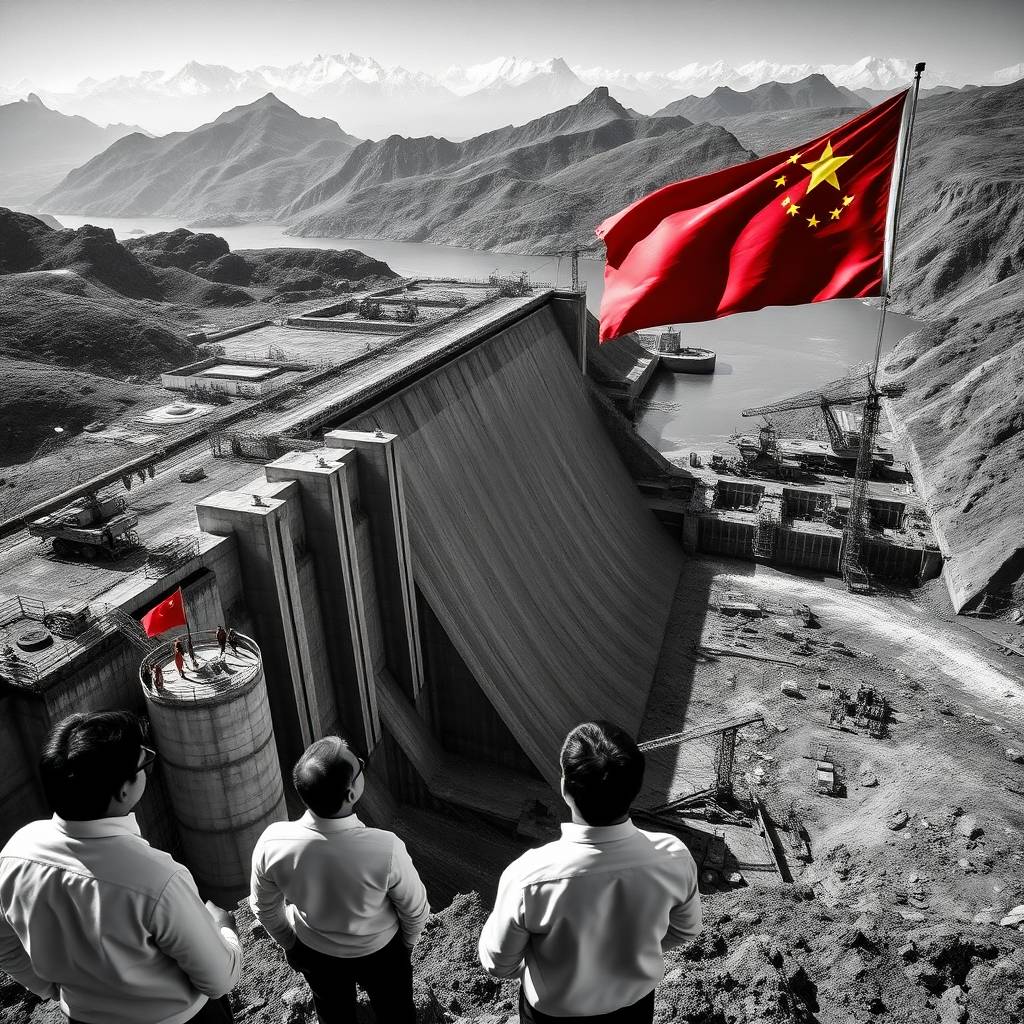
China’s Water Bomb
In recent years, there have been ongoing reports about a significant development along the India-China border: China’s plan to construct the world’s largest dam near the northeastern region of India. This $137 billion project raises serious concerns regarding water security for India, particularly in the northeastern states that rely heavily on the Brahmaputra River. Know the implications of this mega-dam, its potential impact on India and Bangladesh, and the strategies India might adopt to counteract these developments.
Understanding the Project
The Brahmaputra River: A Lifeline
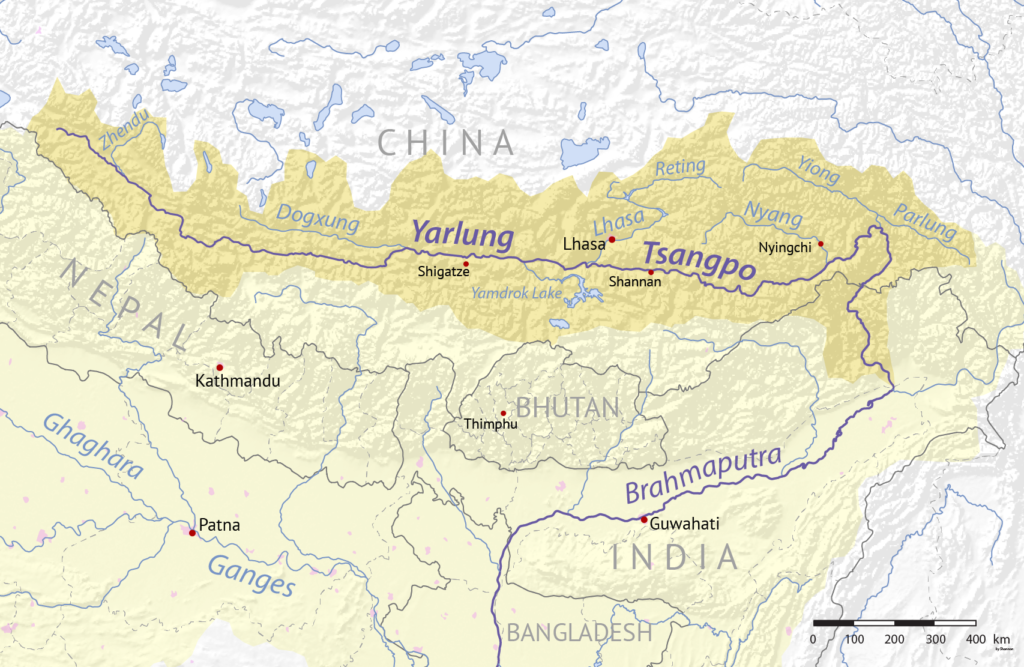
The Brahmaputra River originates in China, specifically in the Tibet Autonomous Region. Its source is the Angsi Glacier, located near Mount Kailash in the Himalayas. In this region, the river is known as the Yarlung Zangbo River or Tsangpo River.
From Tibet, it flows through:
- India: Entering Arunachal Pradesh, where it is called the Siang or Dihang River, and then flowing into Assam as the Brahmaputra.
- Bangladesh: It merges with the Ganges (Padma) River and Meghna River before emptying into the Bay of Bengal.
Thus, the Brahmaputra spans three countries: China, India, and Bangladesh.
This river is vital for the agricultural and drinking water needs of millions in India and Bangladesh. With China’s intention to build a massive dam on this river, the balance of water distribution in the region could be severely disrupted.
China’s Mega Dam: The Details
China has officially approved the construction of a mega-dam that will store vast amounts of water from the Brahmaputra River. This dam is not just a national project; it has implications for neighboring countries, especially India and Bangladesh. Given that the dam’s construction is less than 30 kilometers from the Indian border, the proximity raises alarms regarding water management and potential flooding in India’s northeastern states.
Key Concerns for India
Water Control and Storage
One of the primary concerns for India is that China could control the flow of the Brahmaputra River by storing water in this dam. This could lead to significant shortages in water availability for northeastern states, impacting agriculture, drinking water supplies, and local ecosystems.
Flood Risks
Another pressing concern is the potential for flooding. If China decides to release stored water suddenly, without prior notice, it could inundate northeastern states, leading to disaster for local populations. This scenario has already been highlighted by local leaders and has gained attention on social media, emphasizing the urgency of the situation.
Lack of Treaties
Unlike the water-sharing treaties that exist between India and Pakistan, no formal agreement governs water relations between India and China. This lack of a treaty means that water management practices and data sharing are at the discretion of China, which is a significant concern for Indian policymakers.
Bangladesh’s Perspective
Water Scarcity
Bangladesh is also at risk from China’s dam project. If China diverts water from the Brahmaputra, Bangladesh could face severe water shortages. The implications of reduced water flow could be catastrophic for agricultural practices and the overall water supply in Bangladesh.
India’s Response Strategy
Building a Counter-Dam
To counteract the potential risks posed by China’s dam, India is considering the construction of its own dam in Arunachal Pradesh. This dam could serve as a defensive mechanism against the potential flooding caused by the Chinese dam.
Cost Considerations
The estimated cost for India’s dam is around $50 billion, a substantial investment that signifies the seriousness of the situation. While this is significantly less than China’s mega dam project, it represents a significant budgetary allocation for India, which will need to be justified by the potential benefits of securing water resources for its northeastern states.
The Role of Nature
Natural Disasters
The construction of large dams in earthquake-prone areas raises concerns about the stability of these structures. Any seismic activity could lead to catastrophic failures, with water being released uncontrollably, posing risks not only to China but also to India and Bangladesh.
Environmental Concerns
The environmental impact of large dam constructions, including alterations to local ecosystems, must also be considered. The ecological balance in the region could be threatened, affecting biodiversity and livelihoods dependent on these natural systems.
Future Developments
Political Implications
The geopolitical landscape in the region is likely to shift as these developments unfold. International relations will play a crucial role in how India and China navigate this sensitive issue.
Ongoing Monitoring
As this situation evolves, continuous monitoring and updates will be essential. Future developments will require strategic responses not only from India but also from Bangladesh and other stakeholders in the region.
Click here to see the SOLUTION
China’s mega dam project poses significant challenges for India and Bangladesh, particularly concerning water security and regional stability. It is crucial for India to take proactive measures to secure its northeastern states and establish a robust water management strategy. The implications of these developments extend beyond immediate concerns, as they will shape the geopolitical landscape of South Asia for years to come.