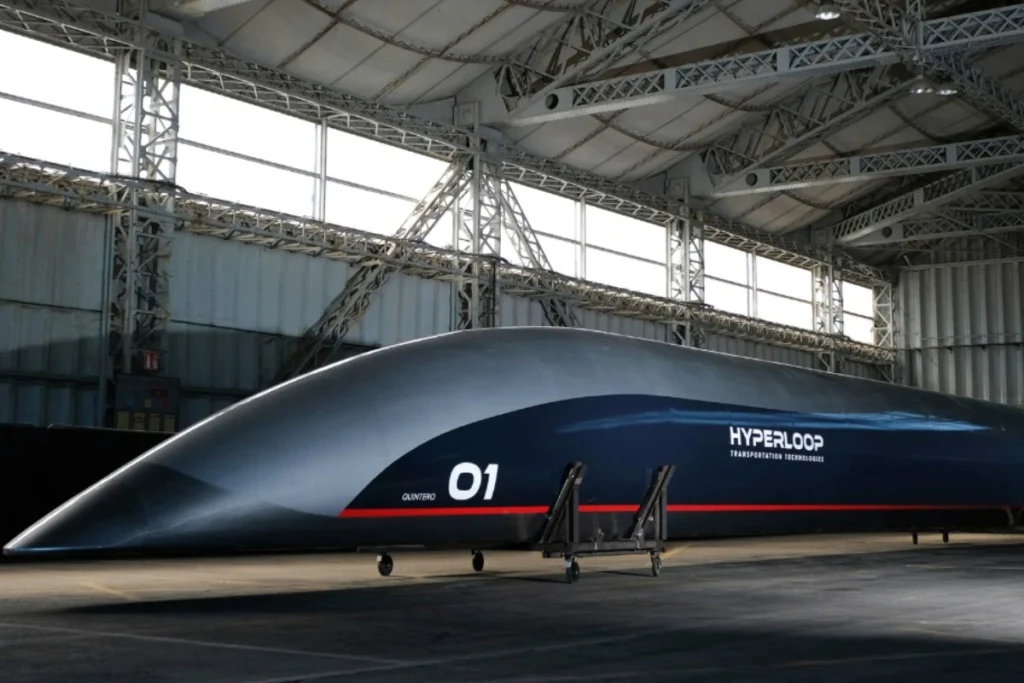
Hyperloop is an innovative high-speed transportation system designed to move passengers or cargo in pods through low-pressure tubes at speeds exceeding 1,000 km/h. This groundbreaking technology aims to revolutionize travel by significantly reducing journey times between major cities.
How Does Hyperloop Work?
The Hyperloop system operates by propelling pods through sealed, low-pressure tubes using magnetic levitation and linear electric motors. The reduced air resistance and friction within the tube allow the pods to achieve ultra-high speeds efficiently.
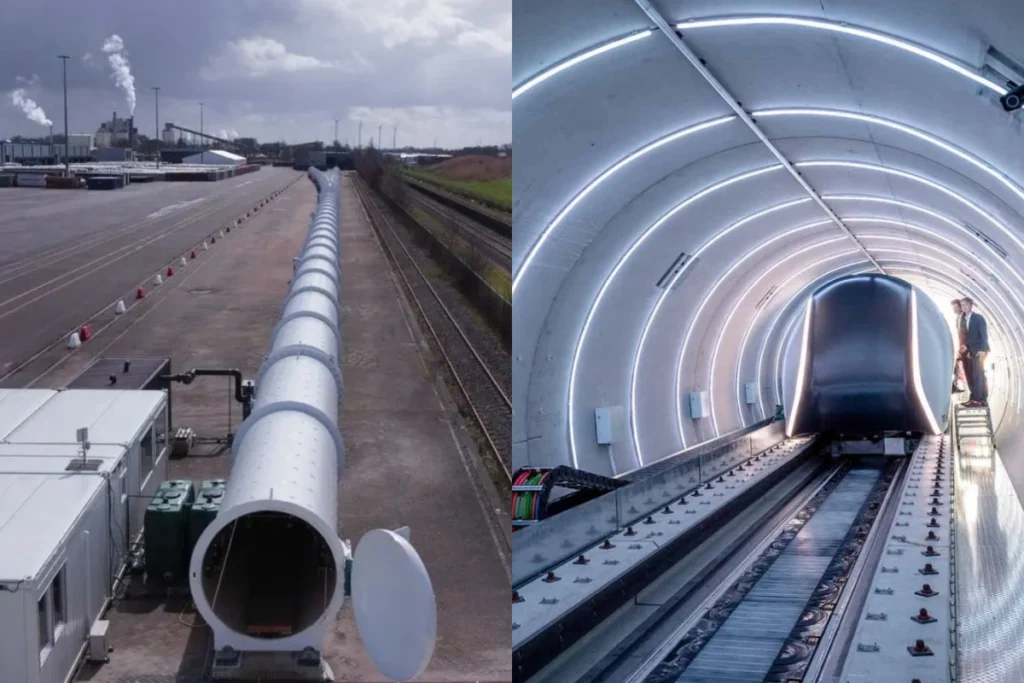
Hyperloop Developments in India
India has been actively exploring Hyperloop technology to enhance its transportation infrastructure:
IIT Madras Test Track: In February 2025, the Indian Institute of Technology Madras unveiled a 422-meter Hyperloop test track, marking a significant milestone in the country’s high-speed transportation research. This facility aims to advance Hyperloop technology, potentially reducing travel times for distances around 300 km to just 30 minutes.
Mumbai-Pune Hyperloop Project: The Maharashtra government has been considering a Hyperloop corridor between Mumbai and Pune, which could cut travel time from the current 3.5 hours to under 35 minutes. A 15-km test track is proposed near Pune to demonstrate the technology’s feasibility.
Government’s Perspective
The Indian government has shown interest in Hyperloop technology:
NITI Aayog’s Feasibility Study: In 2020, NITI Aayog, the government’s policy think-tank, formed a high-level panel to assess the technological and commercial viability of Hyperloop systems in India.
Support for Research Initiatives: The Ministry of Railways has collaborated with IIT Madras to develop the Hyperloop test facility, indicating governmental support for innovative transportation solutions.
Industry Collaborations
International partnerships are fostering Hyperloop development in India:
Swiss-Indian Collaboration: In March 2024, Swisspod Technologies and India’s TuTr Hyperloop signed a Memorandum of Understanding to accelerate Hyperloop research and deployment in the country.
Challenges and Future ProspectsChallenges and Future Prospects
While promising, Hyperloop technology faces several challenges:
High Initial Investment: Developing and deploying Hyperloop systems require substantial funding, which can be a significant barrier.
Regulatory and Safety Concerns: Establishing safety standards and obtaining regulatory approvals are complex processes that need careful navigation.
Infrastructure Development: Building the necessary infrastructure, including extensive tube networks and stations, poses significant logistical challenges.
Despite these hurdles, the potential benefits of Hyperloop—such as drastically reduced travel times and improved connectivity—make it a compelling prospect for India’s future transportation landscape.
Conclusion
Hyperloop technology holds the promise of transforming India’s transportation system by offering ultra-fast travel options. With ongoing research, government support, and international collaborations, India is poised to play a pivotal role in bringing this futuristic mode of transport closer to reality.






Ye article hindi me Hota to jyaadaa amazon data.
I do not even know how I ended up here, but I thought this post was great.
I do not know who you are but definitely you’re going
to a famous blogger if you are not already
😉 Cheers!