Is E20 Fuel Harming Your Car? A Simple Guide for Indian Drivers
If you’ve filled up your tank recently, you’ve probably seen the “E20” sticker at the petrol pump. It means the petrol is mixed with 20% ethanol. The government is making this the standard fuel across India, and it’s left many drivers feeling confused and worried.
You might be hearing stories from friends or online forums about engines making strange noises or your car’s mileage suddenly dropping. Are these just rumours, or is this new E20 fuel a real risk to your vehicle?
This guide cuts through the technical jargon to give you clear answers. We’ll look at why the government is pushing for E20, what the risks are for your car or bike, and most importantly, what you can do to protect your vehicle.
Why is the Government Pushing for E20 Fuel?
- To Save Money on Oil: India buys a lot of its oil from other countries, which is very expensive. By mixing in ethanol made from sugarcane in India, we can reduce how much oil we need to import.
- To Support Farmers: Making more ethanol means a higher demand for sugarcane. This helps farmers get better prices and more stable income.
- For a Cleaner Environment: Ethanol burns cleaner than pure petrol, reducing air pollution and carbon emissions.
The Big Worry: Is Your Vehicle at Risk?
This is the question on every vehicle owner’s mind. The answer depends on how old your vehicle is:
- Newer Vehicles (Made After April 2023): Built to handle E20 fuel with compatible engines and materials. No risk.
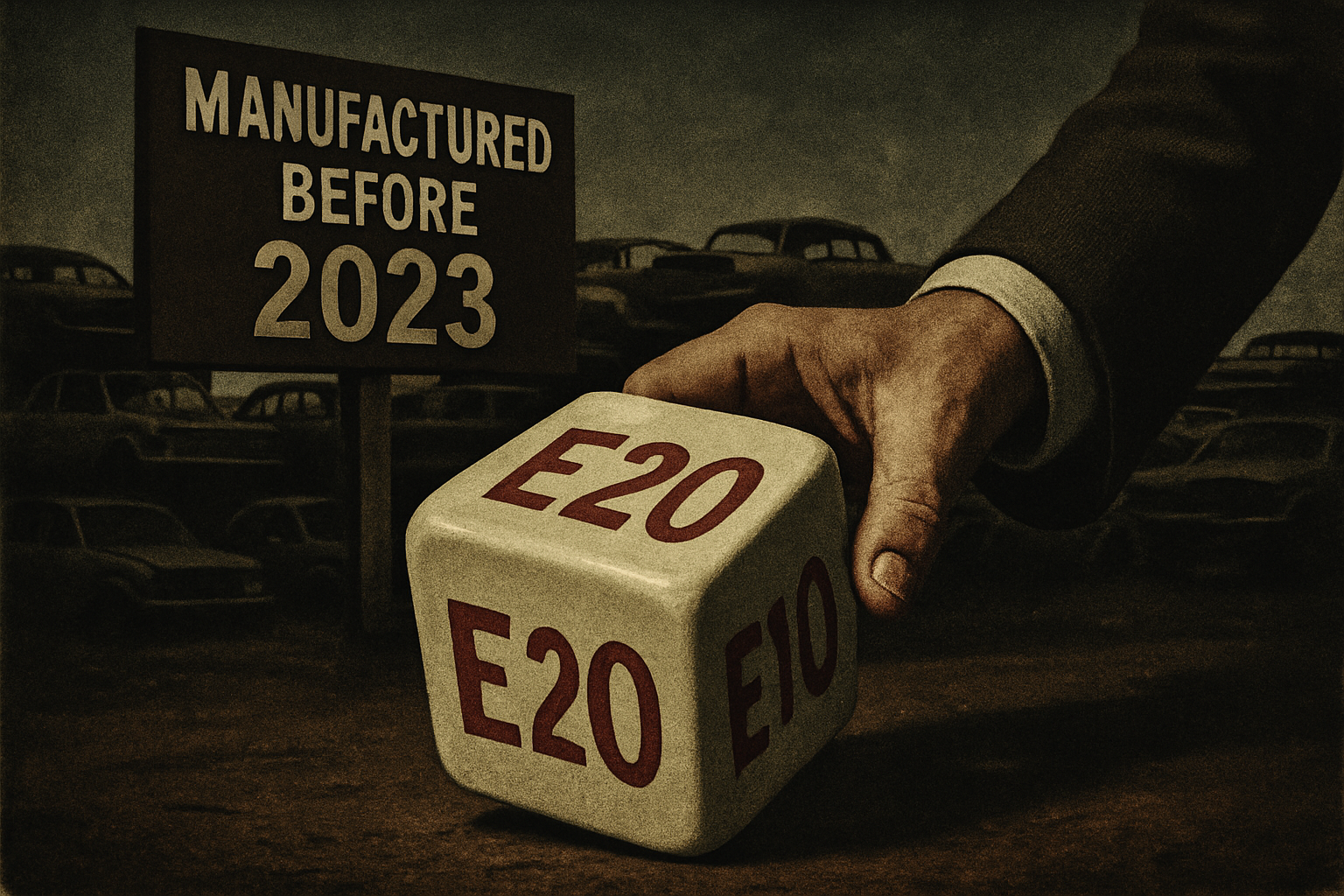
- Older Vehicles (Made Before 2023): Ethanol can corrode rubber hoses, plastic parts, and certain metals in the fuel system, especially in older cars and two-wheelers.
Common problems reported in older vehicles using E20:
- Engine Knocking (pinging or rattling sounds)
- Reduced Mileage
- Power Loss
- Starting Trouble
What About Your Warranty and Insurance?
Many manufacturers warn that if your vehicle is not E20-compliant, using E20 could void your warranty. Insurance companies might also reject claims for engine damage caused by using the wrong fuel type.
What Can You Do? A Practical Checklist
- Check your Owner’s Manual for ethanol compatibility.
- Look for an “E20 Fuel Compatible” sticker inside the fuel filler cap.
- Contact your manufacturer’s customer service for confirmation.
- Pay attention to new sounds, reduced performance, or starting issues and consult a mechanic if needed.
Conclusion: A Call for Clarity
While the government’s goals are important, the rapid switch to E20 has left many drivers uncertain. The best defense is being informed—check your vehicle’s compatibility and demand clear communication from both manufacturers and the government. A greener future shouldn’t come at the cost of your personal property.
E20 Fuel Fact Sheet
- Topic: E20 Ethanol-Blended Petrol in India
- Definition: E20 Fuel is a blend of 80% petrol and 20% ethanol
- Status: Nationwide rollout completed in 2025
- Government Objectives: Reduce crude oil imports, increase farmer income, lower emissions
- Vehicle Compatibility Rules:
- Fully Compliant: Vehicles made after April 1, 2023
- At-Risk: Vehicles made before 2023
- Potential Risks: Material degradation, performance issues, voided warranties
- Advice: Verify compatibility, contact manufacturer, monitor performance, avoid E20 in non-compliant vehicles
Trending FAQs (Frequently Asked Questions)
Q1: How do I know for sure if my car or bike can use E20 fuel?
Check your owner’s manual. Vehicles made after April 2023 are E20 compliant and have an “E20 Fuel Compatible” sticker inside the fuel filler cap. If unsure, contact the manufacturer.
Q2: What’s the worst that can happen if I use E20 in my old bike or car?
E20 can corrode rubber, plastic, and some metal components, causing leaks, poor performance, and costly repairs.
Q3: My mileage has dropped since I started using E20. Why?
Ethanol has less energy content than petrol, so mileage may drop by 3–5% compared to lower-ethanol blends.
Q4: Is E20 fuel cheaper than regular petrol?
Currently, there is no significant price difference between E20 and earlier blends in India.
Q5: What should I do if my vehicle is old and not E20 compliant?
It’s becoming difficult to find E10 fuel. Consult a mechanic for protective fuel additives, but follow manufacturer guidelines for best results.
Q6: Will my insurance cover engine damage caused by E20 fuel?
Most policies exclude damage caused by using the wrong fuel. Claims for non-compliant vehicles may be rejected.